





How to Decorate a Boy’s Room?
There comes a time when a preschooler’s room needs to be transformed into a student’s room. This usually happens when the child is in preschool or just before starting first grade. How can you decorate a boy’s room so that it’s functional, practical, and cozy?
Article at a Glance

It’s a good idea to plan every child’s room so that it includes a sleeping area, a study corner, and a play area. This layout can be arranged in any interior, even in a small room or a room with sloped ceilings.
A boy’s room must have plenty of storage space—toys, books, and school supplies—everything should have its place.
The most important pieces of furniture in a boy’s room are a comfortable bed, a desk, and cabinets for all his little things.

A Boy’s Room – Organize It for Maximum Functionality!
A functional children’s room is one in which you can divide the space into three areas—a sleeping area, a study area, and a play area. This layout can easily be arranged, even if the room is small or has slanted walls. The study area should always be as close to a window as possible to ensure plenty of natural light while studying and reading. This could be a full-height window in the wall or a skylight in a room with sloped ceilings. Remember that you can position the desk sideways or facing the window. It’s best not to arrange the study area so that the person sitting at the desk has the window behind them. This layout means that natural light barely reaches the desk surface.
In the bedroom, the most important piece of furniture is, of course, the bed. For a 7-year-old boy’s room, we recommend a classic junior-style bed that’s 200 cm long. The minimum width for a bed for a boy this age is 90 cm, though if space allows, it’s worth choosing a bed that’s 120 cm wide. This bed size will ensure maximum comfort for sleep and rest. Beds that allow you to use the space underneath for storing various small items—such as beds with storage compartments, drawers, or built-in storage—are very practical. You can also store various items in decorative boxes under the bed.
Some children, even those without siblings, dream of having a bunk bed. Is this a good idea for an only child’s room? Absolutely. In a boy’s room, the sleeping area can be set up on top, while the space below can be used for a desk or a play and storage area. It’s easy to find interesting bunk beds that come with a closet, shelves, and a desk. This is also an excellent solution for a small boy’s room. A shelf above the bed is another practical addition.
The last area is where the boy can play. In this area, the most important things are… comfortable and practical storage furniture. None of us—and especially not a child—really likes cleaning up. And it just so happens that boys have thousands of things that need to be put away, organized, and placed in the right spots. Toys, building blocks, cars, books, sports equipment, clothes—there has to be a place to store all of this, otherwise a mess in the room is guaranteed. Remember, the more cabinets, storage compartments, and boxes, the better. And as children get older, the number of their belongings only grows…
What should you consider when choosing colors for a boy’s room?
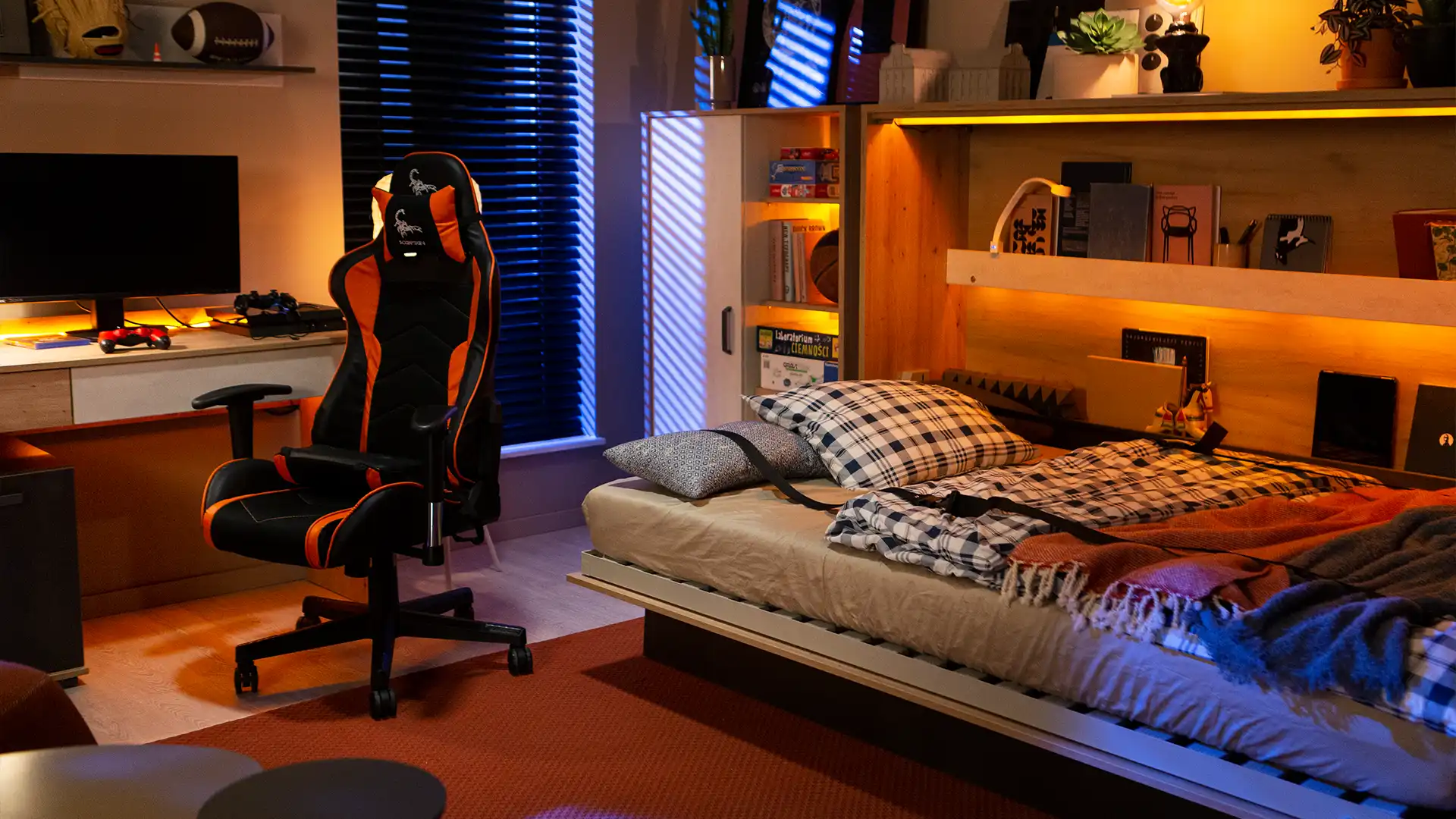
Fortunately, the days when blue, gray, and perhaps green were considered “boy colors” are a thing of the past. Today, colors for a boy are simply those that the young man likes. So which colors work best as dominant hues on the walls? Definitely any pastels, including white. However, to keep things from getting too boring, you can add bolder accents—such as red or deep gray—to sections of the walls, like around the windows. This way, you can also symbolically separate the study area from the sleeping area. Keep in mind, though, that not all colors are suitable for a student’s room. What should you avoid? Definitely loud and intense colors applied to entire walls. However, if your son can’t imagine his room without a bright, eye-catching shade of green, buy accessories in that color—such as pillows, a painting, or a rug—or paint a section of the wall green. Once his fascination with that color fades, you’ll be able to replace it without spending a lot of money.
What kind of decor items for a boy’s room?
- Rug – even the smallest rug will make a boy’s room feel cozier and also provide comfort while he plays. Choose a rug whose colors complement the other accessories or furniture in the room. Rugs with graphics—such as traffic scenes, space motifs, or soccer fields—are also very interesting.
- Soft textiles—pillows of various shapes, bedspreads, blankets, and curtains—are elements that create a cozy atmosphere and give each boy’s room its own unique character. It’s important for the child to choose the colors and patterns of his own accessories, because then he’ll truly feel at home in his room.
- Wall art—we highly recommend any artwork that, in addition to being aesthetically pleasing, also serves a decorative purpose, such as large-format maps of Europe or the universe.
- Lighting – choosing the right lamps for a boy’s room is very important. Ideally, a child’s room should have several light sources. The most important, of course, is the ceiling light, which should provide the most light. In addition, a 7-year-old boy’s room should also have a desk lamp, a bedside lamp with enough brightness to read by, and night lights that provide soft, subdued light. Children are sure to love lamps shaped like animals, fairy-tale characters, or interesting objects, such as cars or a space rocket. The color of the ceiling light and the lamp in the study area should complement the other colors in the boy’s room.

Mistakes in Designing a Boy’s Room
The most basic and crucial mistake when designing a room for a boy is decorating it without involving the child. A seven-year-old boy already has his own interests and knows exactly what his room should look like. The child’s opinion may not have to be the deciding factor (after all, not all children’s ideas are feasible), but it is certainly very important and should be taken into account.
What other mistakes can you make when decorating a room for a boy?
- Lack of adequate lighting, especially in the study area.
- A room that isn’t age-appropriate for the child—that is, a room that’s too “grown-up” or too childish.
- Lack of separation between different functional areas—for example, too many toys in the study corner can make it hard to concentrate on reading.
- Not enough storage space—a lack of adequate storage compartments and cabinets makes it difficult to keep the room tidy.
- Too many intense colors—as we know, colors can either stimulate or calm us. Using a mix of colors, especially intense ones, can overstimulate a child and lead to concentration problems.
What should you keep in mind?
When decorating a child’s room, we sometimes forget what should be most important: safety. Furniture for a child’s room should be designed to meet children’s needs and have the appropriate safety certifications. And most important of all is to secure all the furniture in a boy’s room to the wall—even pieces that seem stable to us, such as wardrobes or bookshelves.
Similar posts
Ideas for a Teen’s Room
How to decorate a teen's room for a girl or a boy (especially a small room) so that it's comfortable, functional, and welcoming for the young occupant.
Read more

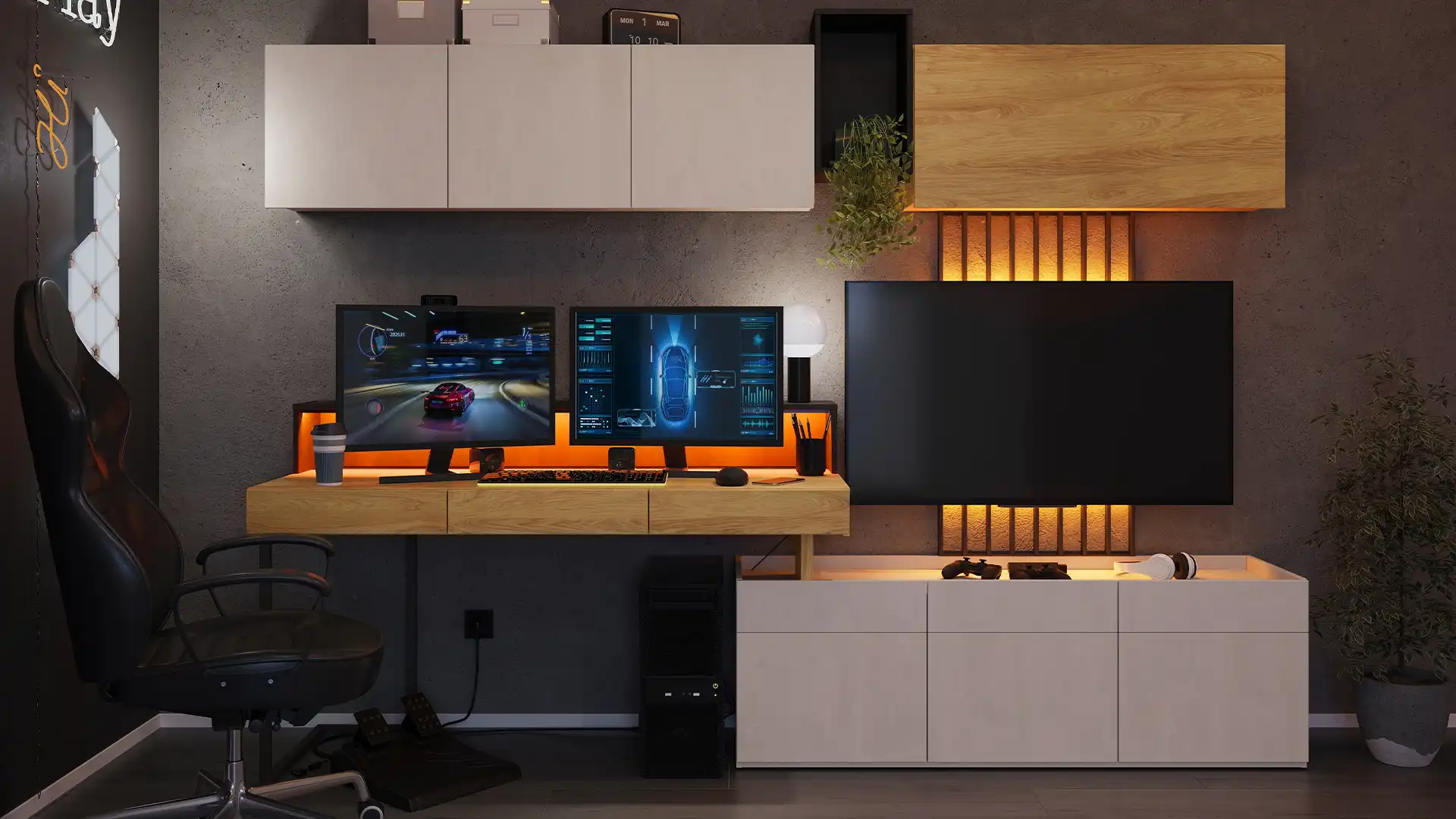
Furniture for a Teen’s Room—What Should You Consider When Choosing?
Are you looking for reliable furniture for a teen's room? We offer trendy and functional furniture for teens in the best styles!
Read more

How to Decorate a Very Small Teen’s Room
A small—or even very small—teenager's room is a reality in many Polish homes and apartments. How should you decorate it? Here are some tips!
Read more

How to Choose a Teen Bed? A Practical Guide
Teen Bed—How to Choose? We’ll show you what to look for and how to pick a mattress. Discover practical solutions for a teen’s room
Read more
